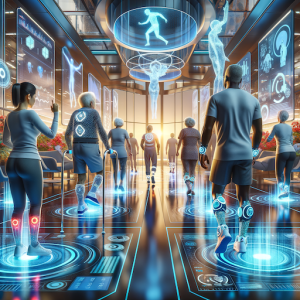
 Overview: Physical function represents a person’s individual capacity to perform the physical tasks of everyday living. Reduced physical function is associated with loss of independence in aging as well as negative health outcomes, including increased fall risk, morbidity and mortality. Physical function is one of the most important factors in perceived quality of life among older adults; therefore, the development of AI and health sensing technologies to support and preserve physical function and prevent falls is of utmost importance for enabling older adults to age within their communities. Wearable sensors, ambient monitoring systems, and computer vision technologies can continuously collect data on gait patterns, posture, reaction time, and muscle strength. Machine learning algorithms can analyze this data to detect changes or abnormalities that may indicate increased fall risk or declining physical function. These approaches have the potential to provide personalized feedback and trigger early interventions to improve balance, mobility, and overall physical performance.

Accelerating Balance Recovery Using Adaptive EVS Therapy
John Ralston, Neursantys Inc. VP Nguyen, UMass Amherst. This project will develop ML-driven methods to adapt EVS stimulus parameters to each patient’s unique sensory and motor impairment profile to increase the effectiveness of NEURVESTA’s current treatment protocol.

AI-Based Video App for At-Home Monitoring of Motor Functions in PD Patients
Hamed Tabkhi, Mona Azarbayjani, ForesightCares Inc. Sanjay Iyer, Memory & Movement Charlotte. The pilot project focused on developing and validating an AI-based visual assessment (AVA) app for at-home monitoring of motor function in older adults with Parkinson’s Disease (PD).

An Objective Assessment Tool for Evaluating Functioning in Older Adults
Ehsan Adeli, Victor W. Henderson, Stanford University. The proposed project aims to design a mobile app that not only instructs and records individuals performing Short Physical Performance Battery (SPPB) tests but also uses these data for predictive analysis to monitor and quantify the risk of cognitive impairment over time, utilizing video data analyzed for motor-cognitive relationships.

Chronic Pain Monitoring and Assessment for LTC Residents with ADRD by AI Sensing
Xian Du, Joohyun Chung, UMass Amherst. Shishir Prasad, BD.
In this project, we will develop the approach for the continuous monitoring of long-term care (LTC) resident’s behavioral and physiological signals over extended durations using cameras and wearable sensors.

Portable Sleep Monitoring in Older Adults with AD/ADRD and Common Chronic Conditions
Rebecca Spencer, UMass Amherst. The pilot project aimed to validate the accuracy and usability of commercial sleep tracking devices in older adults, including those with Alzheimer’s disease (AD), related dementias (ADRD), or mild cognitive impairment (MCI).

Detection of falls and other health events using sound, activity monitoring and machine learning
Richard Watkins, Livindi. The Livindi pilot project aimed to develop and test a technology platform that detects distress-related events—especially falls—using audio recognition, motion sensors, and machine learning. Participants received pre-configured kits with tablets and sensors, and the system was designed to operate entirely on-device to ensure privacy.

Preventing falls before they occur: validating a wearable sensor for Orthostatic Vital Signs
Amar Basu, Wayne State University, Michael Busa, UMass Amherst. This project will evaluate TRACE, a novel wearable sensor for monitoring orthostatic vital signs continuously at home, whenever an individual stands up.

Expanding a Multimodal VR Fitness Platform to Remotely Assess, Monitor, and Report Cognitive and Physical Function for Seniors
Jennifer Stamps and Kyle Rand, Rendever, Inc. This pilot study will evaluate the utility of RendeverFit™, a VR fitness platform, in terms of its acceptance by and relevance to older adults, as well as collect data to support the construction of machine learning models.

Utilizing the Druid Impairment App to Assess and Enhance Senior Adult’s Driving Performance
Micheal Milburn and William DeJong, Impairment Science, Inc. Anuj Pradhan and Shannon Roberts, UMass Amherst. The Druid app uses multiple divided attention tasks to assess cognitive-motor behaviors related to driving. This project aims to validate the Druid app for use by older adults aged 64-85 years.

Decreasing Risk of Falls via Computer Vision & AI Driven Functional Assessments
Dave Keeley, Electronic Caregiver, Inc. Michael Busa, UMass Amherst. This research project will enhance Electronic Caregiver’s Addison Care system with computer vision methods for evaluating functional strength, stability, and falls risk in older adults.

Correlations Between Light Exposure Inputs and Sleep Quality Outputs
Erik Page, Blue Iris. The Blue Iris Labs pilot study investigated how personal light exposure affects sleep quality using a new wearable light sensor called the Speck.

Detecting frailty in home environments through non-invasive whole room body heat sensing in older adults
Amanda Paluch, UMass Amherst. Dae Hyun Kim, Hebrew SeniorLife. Rags Gupta, Butlr Technologies Inc. This AITC pilot project explored the use of non-invasive, ceiling-mounted heat sensors to detect frailty in older adults living in senior communities.

Developing real-world digital biomarkers from wearable sensors in Alzheimer’s disease
Jen Blankenship, VivoSense Inc. Michael Busa, UMass Amherst. This pilot study aimed to develop and validate new algorithms for detecting walking behavior using wearable sensors in older adults, including those with Alzheimer’s disease or mild cognitive impairment.

Past Webinar – Technological Advancements in Functional Assessments and Fall Prevention, John Ralston and Hamed Tabkhi
Overview: This webinar gives an overview of two of the MassAITC pilot projects. John Ralston, from Neursantys describes their work on bioelectronic restoration of the body’s aging balance system. In addition, Hamed Tabkhi of ForesightCares discusses their product, AVA, which is an AI-powered, video-based mobile app designed to enable clinically grounded fall risk assessments directly in the home. Abstracts: About the Speakers:

Past Webinar – Progress in Personalizing Content and Dosing of a Physical Activity Promotion Intervention, David E. Conroy
Abstract: The Michigan Roybal Center aims to develop physical activity interventions for middle-age and older adults that engage validated mechanisms for adhering to behavior change following the end of active intervention support. This talk will review our ongoing work (a) to develop person-specific dosing algorithms to select the content and timing of text messages and (b) to engineer prompts for generative artificial intelligence systems to author message content that activates affective motivational processes to promote physical activity. The long-term objective of fusing these personalization strategies is to improve adherence to behavior change and reduce risk for Alzheimer’s disease and related dementias. Biography:
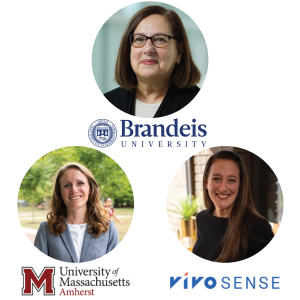
Webinar – Technology for Enhancing Functional Health: Monitoring Movement with Wearables and Sensors, Margie Lachman, Amanda Paluch, Jen Blankenship
Abstract: Nearly half of adults over 75 experience functional limitations, often worsened by physical inactivity and sedentary behavior. There is an inherent need for innovative technologies—such as wearables, sensors, and AI systems—to detect early declines and support timely interventions that maintain independence and quality of life. This webinar explored potential innovative approaches that are being developed through the support of the MassAITC pilot program to support functional health and independence among older adults through wearable and ambient sensor technologies. Dr. Amanda Paluch (University of Massachusetts) presented her pilot study on detecting frailty in home environments using non-invasive, whole-room body heat sensors (Butlr Care). Her team’s interdisciplinary work aims to develop low-burden, contactless algorithms capable of continuously monitoring movement patterns to detect early signs of frailty and support interventions that promote

MassAITC Webinar – Wearable Acoustic and Vibration Sensing and Machine Learning for Human Health and Performance, Omer Inan
This talk will focus on: Abstract: Recent advances in digital health technologies are enabling biomedical researchers to reframe health optimization and disease treatment in a patient-specific, personalized manner. This talk will focus on my group’s research in two areas of relevance to digital health: (1) cardiogenic vibration sensing and analytics; and (2) musculoskeletal sensing with joint acoustic emissions and bioimpedance. Our group has extensively studied the timings and characteristics of cardiogenic vibration signals such as the ballistocardiogram and seismocardiogram, and applied these signals for cuffless blood pressure measurement, heart failure monitoring, and human performance. We have also leveraged miniature contact microphones to measure the sounds emitted by joints, such as the knees, in the context of movement, and have examined how these acoustic characteristics are altered by musculoskeletal injuries and