 Overview: Early detection of Alzheimer’s disease and Alzheimer’s disease related dementias (AD/ADRD) is of growing importance as research on therapeutics that can potentially slow the progression of the disease continues. Early diagnosis is currently an unmet need as it is estimated that upwards of 60% of adults over 65 years have undiagnosed mild cognitive impairment. Earlier, formal diagnosis of AD/ADRD would permit more timely access to available interventions and care pathways, such as the Centers for Medicare & Medicaid Services Guiding an Improved Dementia Experience (GUIDE) Model launched in the summer of 2024. Leveraging advanced machine learning algorithms and large datasets (neuroimaging, genetic markers, cognitive test results, and more) has the potential to result in new approaches that can identify subtle changes in brain function and behavior that support reliable early detection of AD/ADRD.
AI-Driven Early Detection of AD Risk Using Speech Features
Marziye Eshghi, MGH Institute of Health Professions. This project will leverage AI-driven analysis of remotely collected speech data to detect early signs of Alzheimer’s disease (AD) by linking speech acoustic and kinematic features to AD molecular pathologies.

Leveraging Digital Cognitive Rhythms to Detect ADRD Risk in Family Caregivers
Raeanne C Moore, UCSD, Yeonsu Song, UCLA. This project will develop and pilot machine learning algorithms to passively monitor cognitive fluctuations among family caregivers of persons living with dementia by analyzing their smartphone typing patterns and speech.

AI-assisted Prediction of Healthy Aging and Alzheimer’s Disease Progression
Chaitanya Gupta, ProbiusDX Inc., Steven Arnold, Massachusetts General Hospital. This project will use Probius QES, a novel technology that measure molecular vibrations in blood plasma samples, to identify and differentiate healthy aging vs Alzheimer’s Disease progression in a well characterized cohort of 1000+ individuals from MassGen.

An academic-industrial partnership for AI-based sleep staging in the elderly using an EEG headband and a smartwatch
Joyita Dutta, UMass Amherst. This project will develop AI techniques for at-home sleep staging in seniors using multimodal data from EEG headband and smartwatch devices.

Passive monitoring of walking cadence as a novel tool for aging and cognitive health assessment
Honghuang Lin, UMass Chan Medical School. This pilot project explored the use of wearable accelerometers to passively monitor walking cadence as a potential early indicator of cognitive decline in older adults.

AI-Supported In-Home Brain Assessments for Older Adults and Persons with Alzheimer’s Disease
Quan Zhang, Massachusetts General Hospital. This project will create an adapted version of NINscan, a Near-Infrared Neuromonitoring Device, with the goal of enabling older adults and AD patients to collect high quality brain and physiological data at home.

Expanding a Multimodal VR Fitness Platform to Remotely Assess, Monitor, and Report Cognitive and Physical Function for Seniors
Jennifer Stamps and Kyle Rand, Rendever, Inc. This pilot study will evaluate the utility of RendeverFit™, a VR fitness platform, in terms of its acceptance by and relevance to older adults, as well as collect data to support the construction of machine learning models.

Testing a vocal biomarker platform for remote detection and monitoring of cognitive impairment in the home environment
Erik Larsen, Sonde Health. Brad Dickerson, Massachusetts General Hospital.
Bonnie Wong, Massachusetts General Hospital. The pilot project, conducted by researchers from Massachusetts General Hospital and Sonde Health, explored the use of a vocal biomarker platform to detect and monitor cognitive impairment in older adults.

Past Webinar – Understanding and Assisting Older Adults with AI: From Emotional States and Functional Capacity to Assistive Technologies
Abstract: Older adults’ needs and abilities are multidimensional and continuously changing, yet much of today’s AI focuses on detecting isolated events or predicting individual outcomes. Our work explores how AI can develop a richer understanding of older adults by integrating behavioral, emotional, functional, clinical, and environmental information. We investigate how subtle changes in emotional state can be inferred from multimodal behavior, how routinely collected clinical data can reveal meaningful patterns of intrinsic capacity, and how AI and robotics can translate this understanding into practical assistance. Across these efforts, we are also developing the data integration and validation infrastructure needed to make AI systems reliable, generalizable, and useful in real-world aging settings. Ultimately, our goal is to move from AI that simply observes older adults to AI that understands their changing

Past Webinar – Best Practices for Digital Phenotyping Research in Aging Populations
Abstract: Digital phenotyping is transforming aging research by enabling high-frequency, real-world measurement of cognition, behavior, symptoms, and context through smartphones, wearables, and passive sensing technologies. This talk will review how digital health tools can complement traditional clinic-based assessments by capturing intraindividual variability, diurnal patterns, environmental influences, and subtle changes in cognitive and functional performance that may signal risk for neurodegenerative disease. Using examples from studies of healthy aging, MCI, Alzheimer’s disease risk, dementia caregiving, and related clinical populations, the talk will highlight best practices for designing digital phenotyping protocols, balancing participant burden with data richness, maximizing adherence, integrating active cognitive assessments with passive data streams and biomarkers, and applying analytic approaches that distinguish within-person change from between-person differences. The session will emphasize opportunities for digital phenotyping to improve early detection,
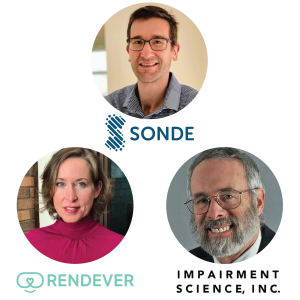
Webinar – Novel Technological Approaches for Detection of Cognitive and Functional Impairment: Drs. Larsen, Stamps, and Milburn
Abstract: This webinar explored cutting-edge technologies aimed at improving early detection and monitoring of cognitive and functional impairments in older adults. Dr. Kate Papp (Mass General Brigham) opened the session by highlighting the challenges of traditional clinical assessments—lengthy, labor-intensive, and inaccessible to many—and the promise of scalable, remote, and ecologically valid digital tools to address the growing needs of an aging population. Three MassAITC pilot awardees presented innovative approaches: A panel discussion with Dr. Rhoda Au (Boston University) addressed barriers to widespread adoption, including data privacy concerns, user acceptability, and integration into clinical workflows. Presenters emphasized the importance of validating these technologies in real-world environments to ensure accuracy, usability, and patient trust. About the Speakers:

Past Webinar – Digital Cognitive Assessments in Preclinical Alzheimer’s Disease, Kate Papp
Abstract: Traditional paper-based cognitive assessments, while the current gold standard in clinical trials for Alzheimer’s disease (AD), lack the sensitivity and ecological validity needed to detect subtle cognitive changes in preclinical stages. Dr. Kate Papp’s work highlights cutting-edge approaches leveraging digital technologies—ranging from AI-analyzed speech and digital pens to ecological momentary assessments and learning curve paradigms. Her team’s development of the Boston Remote Assessment for Neurocognitive Health (BRANCH) demonstrates how multi-day, web-based testing on participants’ own devices can identify diminished learning effects over days—correlating with AD biomarkers and predicting cognitive decline. This talk also addresses validation challenges, participant adherence, and data privacy considerations crucial for adoption in clinical trials. These insights underscore the potential of digital cognitive measures to accelerate early detection, improve trial efficiency, and support Alzheimer’s prevention efforts

Past Webinar – Technology Use in Alzheimer’s Disease Research: Current Status & Future Promise, Rhoda Au
Abstract: Digital technologies offer unprecedented opportunities to revolutionize cognitive health monitoring and Alzheimer’s disease prevention. Current high-burden, clinic-based assessments can be augmented by passive engagement technologies—leveraging smartphones and their array of embedded sensors for continuous, unobtrusive data collection. At the Framingham Heart Study and BU Alzheimer’s Disease Research Center, multi-sensor approaches combining smartphone applications, digital voice, eye-tracking, and in-home monitoring are being deployed to detect subtle cognitive and behavioral changes. Through the Davos Alzheimer’s Collaborative, a global minimal viable protocol has been launched, integrating digital and blood-based biomarkers across diverse populations. Data sharing via the Alzheimer’s Disease Data Initiative (ADDI) is accelerating discovery through open challenges and collaborative analytics. This paradigm shift emphasizes inclusivity, rethinking traditional study designs, and advancing from digital phenotyping to truly dynamic, multi-dimensional digital biomarkers. The