Abstract
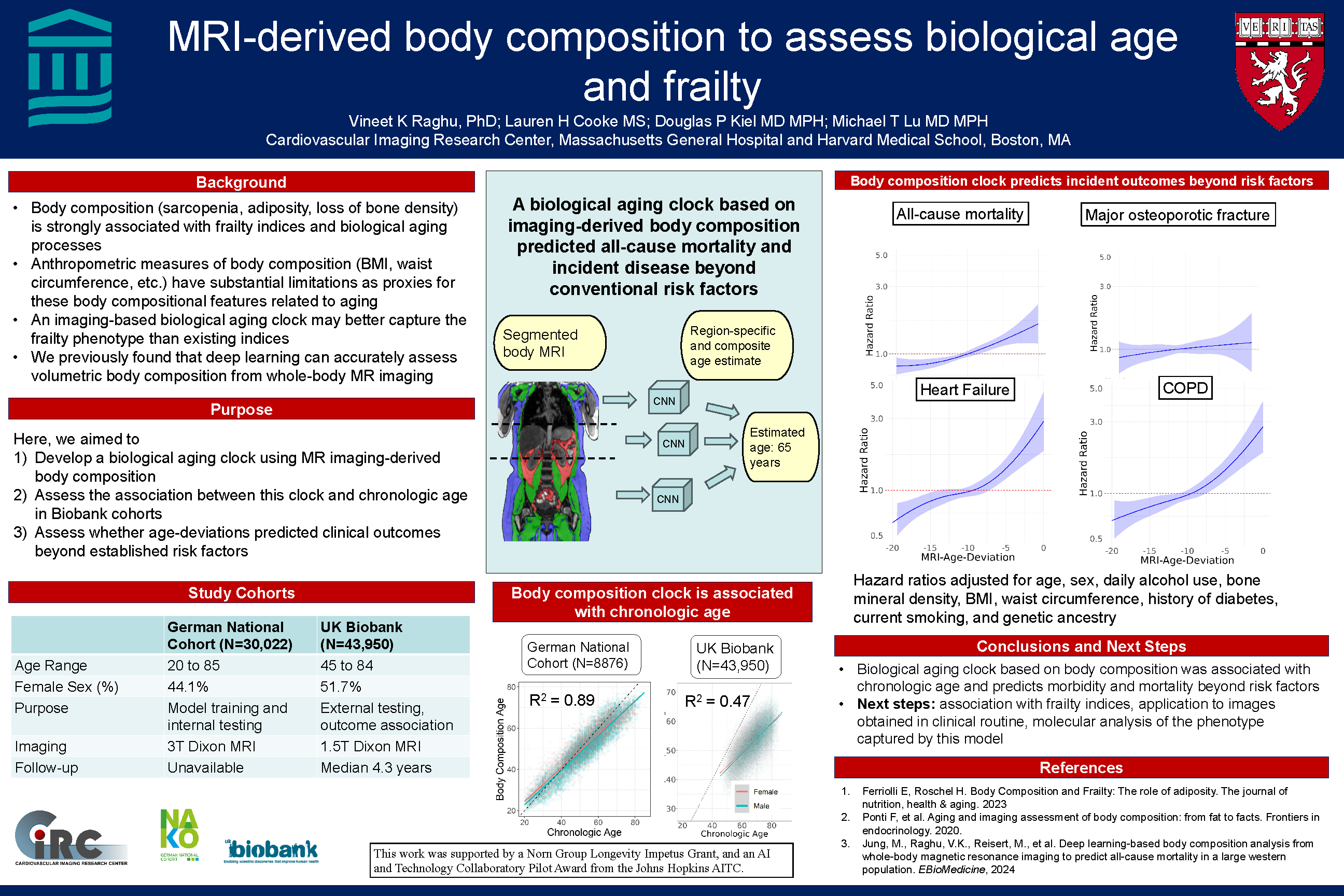
Chronologic age is an imperfect measure of biological processes underlying aging; measures of biological age are needed. The distribution of adipose tissue and muscle have well-established associations with aging, and non-invasive imaging (e.g., CT, MRI) coupled with deep learning tools provide a unique opportunity to measure body composition at scale and study how body composition changes with age. We used a publicly available tool to extract fat and muscle masks from 30,452 German National Cohort (NAKO) participants (aged 20-85) and 43,950 UK Biobank (UKB) participants (aged 45-84). We developed a deep learning model to estimate biological age based on these masks in the NAKO and externally tested this model in the UKB. We found that this body composition age was strongly associated with chronological age (NAKO R2 0.89, UKB R2 0.67). After adjustment for conventional risk factors, UKB participants in the top 20th percentile of biological age had a 2-fold higher hazard for all-cause mortality, incident heart failure, diabetes, and COPD.