Abstract
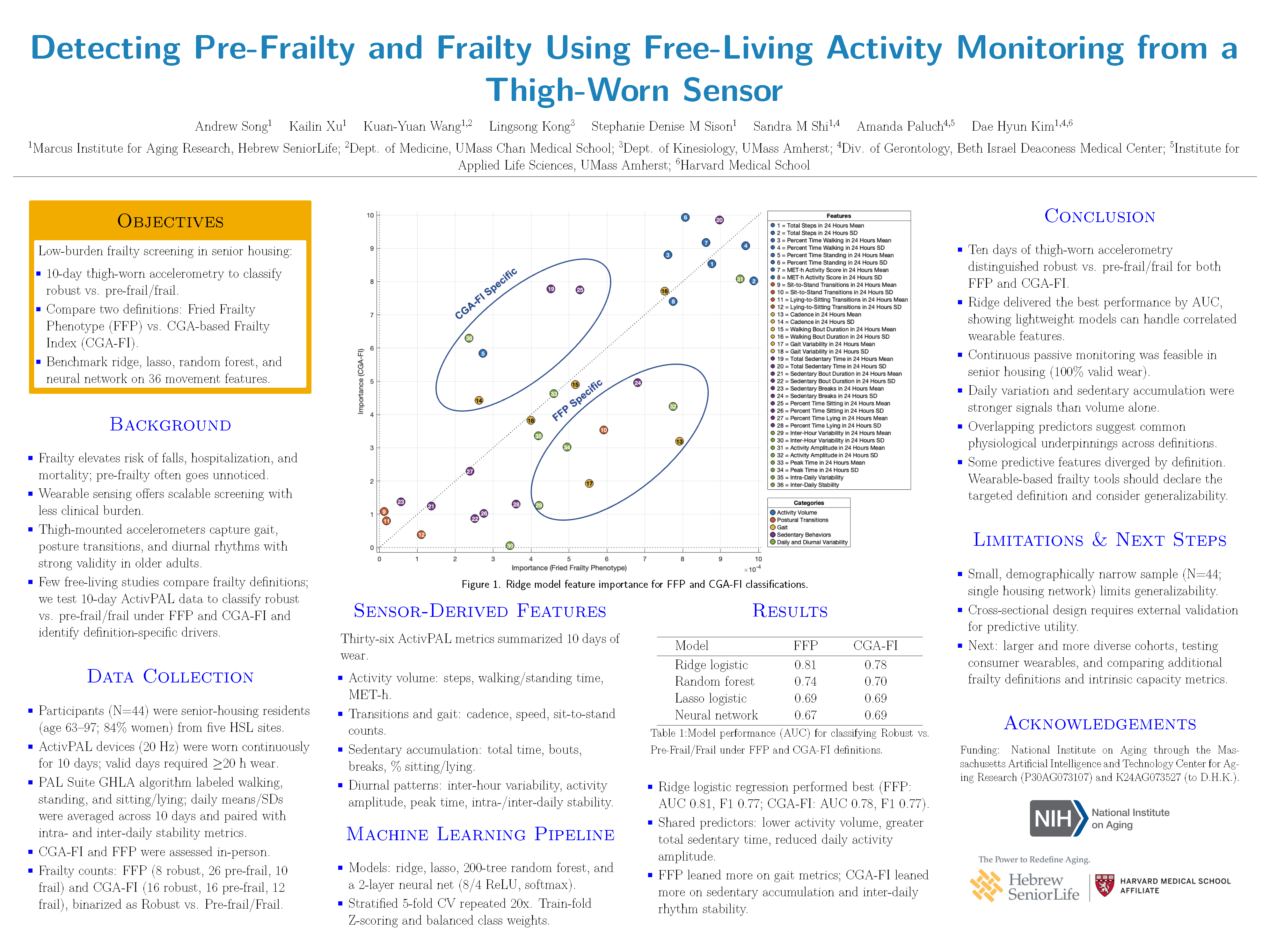
We evaluated whether thigh-worn accelerometry distinguishes robust from pre-frail/frail older adults for two frailty definitions. Forty-four older adults (mean age 82.3 years) wore a thigh-mounted accelerometer for 10 days and completed Fried Frailty Phenotype (FFP) and CGA-Based Frailty Index (CGA-FI) assessments. Thirty-six activity features were extracted and used to train machine-learning classifiers. The ridge regression performed best (AUC 0.81 FFP; 0.78 CGA-FI). Lower activity, greater sedentary time, and reduced diurnal amplitude predicted frailty across definitions, with gait metrics linked to FFP and sedentary patterns to CGA-FI. We conclude that thigh-worn accelerometry can identify pre-frailty/frailty, with definition-specific predictive features.