MassAITC Cohort: Year 5 (AD/ADRD)
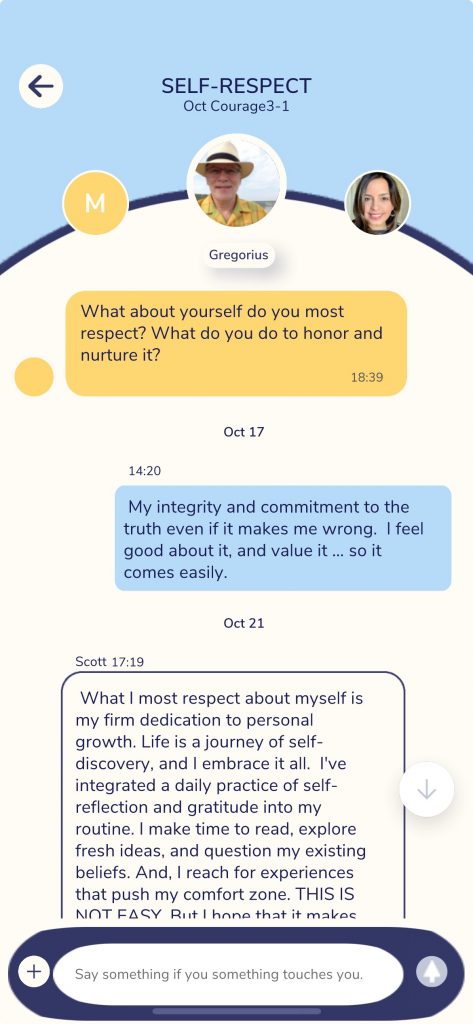
Final Project Accomplishments: This project involved developing and testing FBOT, an AI-powered conversational bot designed to facilitate small group discussions for caregivers. Across three phases of testing from May through the fall of 2026, the researchers recruited 93 participants—initially older adults and subsequently caregivers of spouses with Alzheimer’s disease and related dementias (ADRD). Participants engaged with the “Only Human” platform architecture, which presented one open-ended question per day over a week-long period, while FBOT provided lightweight facilitation. All project milestones and deliverables were successfully achieved, with participants recruited across the United States and providing positive feedback throughout the testing phases.
The study’s key findings demonstrate that FBOT successfully facilitated peer-to-peer engagement and was validated for its intended purpose of enabling safe and economical scaling of support groups. Notably, FBOT facilitation was not inferior to human facilitation and may have even improved peer-to-peer engagement, while offering practical advantages including continuous safety monitoring and low marginal costs. Across all cohorts, high satisfaction metrics emerged: 87% of older-adult participants liked the experience very much or extremely, 96% enjoyed answering the questions, and 74% rated their likelihood to recommend it at 8-10 out of 10. The researchers concluded that the “Only Human” methodology produced uniformly strong results, with the value stemming from the architecture itself—thoughtful questions, universal participation, psychological safety through asynchronous interaction, and the experience of being heard—rather than solely from shared caregiving circumstances.
Initial Proposal Abstract: Over 6 million Americans live with Alzheimer’s Disease or related dementias (AD/ADRD)—a number expected to surpass 13 million by 2060, placing enormous strain on families and our healthcare system. More than 11.5 million unpaid caregivers now provide over 18 billion hours of support each year, often with little emotional or social help. Many feel isolated, overwhelmed, and unseen.
Socratic Sciences in collaboration with UMass and NYU is developing a scalable, low-cost solution: an app-centered, question-driven approach that fosters deep connection and understanding among caregivers through small, trusted groups. Unlike typical online forums, The app uses crafted, open-ended questions about personal values and caregiving experiences to spark meaningful dialogue and mutual support. In the pilot testing, our team will be collecting and analyzing data related to user engagement, satisfaction, and mutual support, as well as the utility of the newly developed AI facilitation bot.
Our AITC project will develop and refine an AI group facilitator that enhances these small-group dynamics without costly human moderators. Once optimized, this LLM-based facilitation will enable large-scale access, setting the stage for clinical validation and eventual commercialization. The goal is to provide millions of caregivers—especially those underserved—with an effective, accessible, and emotionally sustaining support system
Outcomes:
- Poster Presentation: 2026 a2 National Symposium
 Title: Scalable LLM facilitation for peer-to-peer support groups of informal caregivers Authors: Gregory Stock, Ozel Yilmazel, Don Ponturo, Hamed Zamani, Mary Mittelman